End-of-arm design
10 Tips: Gripping Checklist
See how early design decisions can reduce rework, improve process stability, and make end-of-arm planning more reliable.
Your checklist to safer gripping and handling
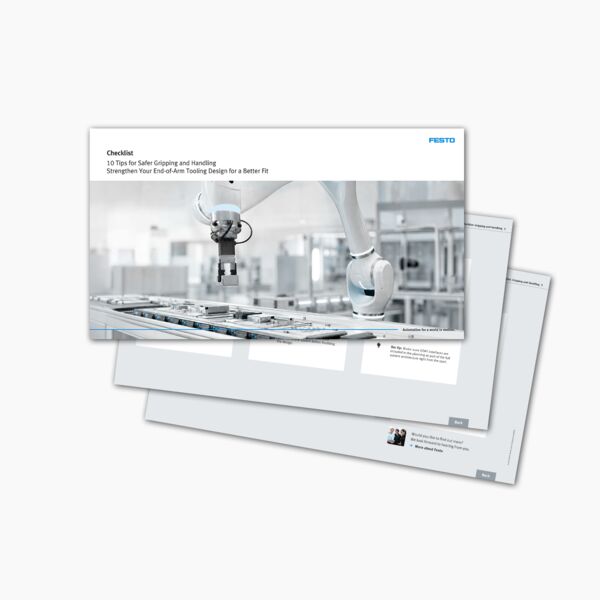
You will be able to review the key end-of-arm decisions that affect reliability, integration effort, and commissioning risk.
- Start with the workpiece and the full application context
- Check robot dynamics, payload, and interfaces early
- Evaluate vacuum behavior under actual surface conditions
- Build tolerances, variation, and future formats into the concept
- Validate critical handling factors before releasing the final design
Spot design risks earlier
Identify where end-of-arm design can fail before late changes affect commissioning, cycle time, or process stability.
Plan based on real-life conditions
Review how motion, surfaces, tolerances, leakage, and environment can influence gripping performance.
Reduce engineering uncertainty
Use practical questions to make concept decisions clearer and avoid unnecessary oversizing or redesign loops.
Why application-driven end-of-arm design matters

“Most end-of-arm issues become expensive as they are discovered too late. This guide helps engineering teams ask the right questions before the concept is fixed.”
Martin Beier
Head of Product Development Gripper
Festo SE & Co. KG
Get the Checklist